collage

collage

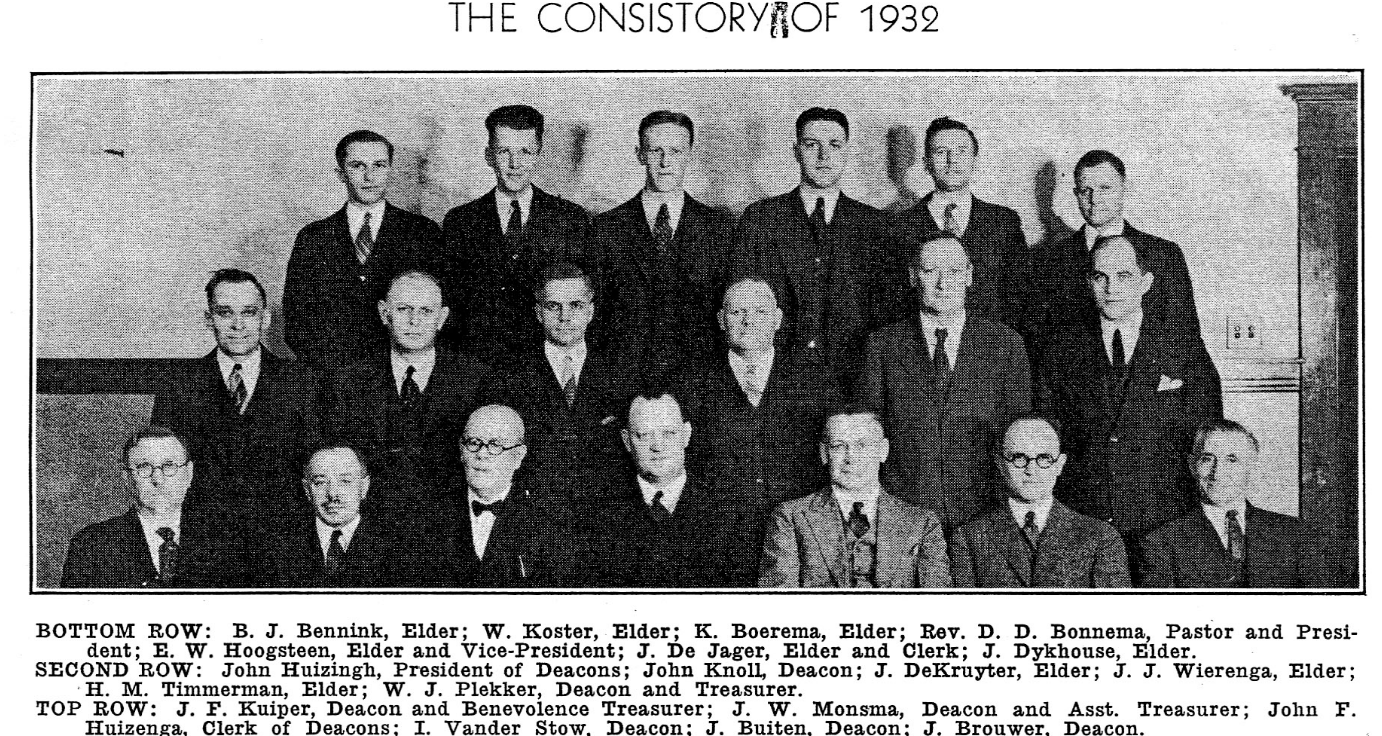
consistory

consistory

Featured Post

THIS BLOG IS MOSTLY re 1ST CRC, BUT my MAIN CRC BLOG IS AT THE BELOW LINK

 http://my-beloved-christian-reformed-church.blogspot.com/

Sunday, November 30, 2025

"CRC-N raises alarm over rising attacks on schools, urges FG to act " - Daily Post Nigeria

https://dailypost.ng/2025/11/29/crc-n-raises-alarm-over-rising-attacks-on-schools-urges-fg-to-act/ 

"The position of the Church was contained in a communiqué issued at the weekend following its 161st General Church Council (Synod), held at CRC-N No. 1 Takum, in Takum Local Government Area of Taraba State.


The communiqué signed by CRC-N President, Rev. Dr. Isaiah Jirapye Magaji, and General Secretary, Rev. Joseph Agbu Ahmadu Garba reaffirmed the Church's belief that Christians in Nigeria continue to face targeted violence, echoing earlier remarks by former U.S. President Donald J. Trump..."

Friday, November 28, 2025

The History of the Christian Reformed Church in North America (CRCNA)

The History of the Christian Reformed Church in North America (CRCNA)

The History of the Christian Reformed Church in North America (CRCNA)

The history of the Christian Reformed Church in North America (CRCNA) is a study in theological migration, institutional tension, and the enduring power of the secessionist impulse. Founded formally in the United States in 1857, the denomination originated not merely from a general flow of Dutch immigration, but from a focused, religiously motivated movement seeking to establish a purer form of Dutch Calvinism free from perceived state and theological corruption. From its roots in 19th-century European dissent to its current struggles with exponential demographic decline and disputes over contemporary social issues, the CRCNA has continually wrestled with the paradox of defining and maintaining covenant purity within a broader cultural context.


I. The Deep Roots of Dissent: Antecedents of the CRCNA (1560–1847)

I.A. The Continental Reformed Heritage and the Impulse for Purity

The CRCNA grounds its heritage in the magisterial Reformation of the sixteenth century. As one branch of the Protestant movement, its theological foundations were shaped significantly by the work of Ulrich Zwingli and John Calvin, flourishing as the "Reformed" tradition, particularly in the Netherlands. This theological heritage dictates a profound commitment to the sovereignty of God, the doctrine that salvation is granted solely by grace and cannot be earned through good works, and the belief that Holy Scripture serves as the singular guide for Christian practice and doctrine. The CRCNA specifically reveres historic Dutch Calvinism, adhering to the doctrinal formulations encapsulated in the Canons of Dort and the Church Order of Dort.

I.B. The Dutch Afscheiding (Secession of 1834)

The immediate organizational origins of the CRCNA reside not in the 16th century but in the religious and ecclesiastical turmoil of the 19th-century Netherlands. The denomination was fundamentally shaped by the Dutch religious revival and subsequent schism known as the Afscheiding, or Secession. This movement began around the 1820s and 1830s as a reaction against the established state church, the Hervormde Kerk, which was perceived to be compromised by theological liberalism and control by the Dutch monarchy.

The Secession was spurred by figures who sought to restore strict adherence to the Reformed Confessions. Individuals such as Cornelius Vander Meulen, an important Secession preacher, played a critical role in the movement. Hendrik De Cock, whose deposition was a significant catalyst for the Secession of 1834–1835, had his Calvinist convictions challenged by the state church, creating a precedent for resistance that would be mirrored in the United States decades later.

I.C. The Migration Imperative (1845–1880)

The Dutch immigrants who would eventually establish the Christian Reformed Church in North America were overwhelmingly drawn from this Seceder background. This demographic reality is central to understanding the denomination’s identity. Between 1845 and 1880, approximately 13,000 Seceders emigrated, comprising 65 percent of all Dutch emigrants during that period. In the crucial founding year of 1847, 79 percent of all emigrants were Seceders, an astonishing figure considering that Seceders constituted barely one percent of the Dutch population in the homeland.

This highly focused migration of a religious minority granted them a disproportionately strong presence in North America. The influx of Seceders meant that the CRCNA was not merely a Dutch immigrant church, but institutionally embodied the DNA of dissent. The primary motivation for this intense migration transcended simple economics; it was often viewed as a missionary endeavor, an expression of determination to create a society consistent with the fullest implications of Calvinistic covenant life on "virgin soil".

These immigrants carried with them deeply embedded patterns of behavior and belief, what might be termed the Seceder "baggage". They were characterized by a pietistic bent, a reverence for the "old writers," and a foundational wariness of centralized ecclesiastical power, educated elites, and formal synods. They preferred gathering in small conventicles, known as gezelschappen, often led by lay preachers, or oefenaars. This inherent anti-establishment zeal, born from fleeing the corrupt hierarchy of the state church, would create a paradox: the CRCNA would soon need to establish the very institutions (Synod, Classis, Seminary) that their founding members were conditioned to distrust.


II. Establishing the Church in a New Land: Immigration, Settlement, and the Schism of 1857

II.A. Key Settlements and Initial Affiliation

The first major Dutch settlements in the United States were established in the Midwest in the mid-1840s. These colonies were geographically concentrated in West Michigan (including Holland and Grand Rapids), Iowa (Pella and Orange City), and Wisconsin. The founding pastors of the most prominent colonies—figures such as Albertus Van Raalte, Cornelius Van der Meulen, Maarten Ypma, and Seine Bolks—were all Seceders from the Hervormde Kerk.

Crucially, many of these initial colonies, including those founded by the influential Albertus Van Raalte in Michigan, affiliated with the existing Reformed Dutch Church (which later became the Reformed Church in America, or RCA). Van Raalte’s strong leadership was instrumental to the success of the Michigan colony; however, his decision to join the RCA, a denomination that conservatives already felt was losing its Reformed character, was regrettable to the purists and laid the groundwork for the eventual split. The RCA proceeded to establish institutional roots in the colonies, founding institutions such as Hope College and Western Theological Seminary in Holland, Michigan, and Central College in Pella, Iowa.

II.B. The Secession of 1857: The Birth of the CRCNA

By the middle of the 19th century, conservative Seceders within the RCA congregations, particularly in Michigan, felt that the American church was exhibiting problems similar to those they had fled in the Netherlands, including laxity in discipline and doctrinal drift. This tension culminated in the 1857 Secession, the formal organizational creation of the Christian Reformed Church in North America.

The separation was initiated by a group of conservative members in Michigan, led prominently by Elder Gijsbert Haan (1801–1874). The secession began in March 1857 when the Noordeloos church of the Classis of Holland left the RCA. This was quickly followed by groups organizing First CRC Grand Rapids, and the departure of churches in Graafschap and Polkton.

The initial split was small, involving only four churches and approximately 130 families—about 10 percent of the Dutch immigrant church members in West Michigan. However, the new denomination was quickly bolstered by later developments. Further congregations left the RCA in 1882, mirroring conservative movements happening simultaneously in the Netherlands. Consequently, the seceding church body in the Netherlands transferred its institutional loyalty to the newly formed CRC, cementing the CRC’s identity as the genuine institutional heir of the Afscheiding on American soil. From this point forward, new Dutch immigrants tended to choose the CRC almost automatically.

II.C. Doctrinal and Practical Flashpoints of the 1857 Secession

The separation of 1857 was motivated by disagreements that were often matters of practical piety and church discipline, reflecting the Seceders' ingrained commitment to institutional purity. These issues served as boundary markers between the conservative immigrant faction and the more established, accommodating RCA:

Table 1: Historical Drivers of the 1857 Secession

Category of Dispute Specific Issue CRCNA/Seceder Stance RCA Stance (as perceived)
Worship Practice Use of Hymns Exclusive Psalmody (Hymns prohibited) Allowed use of Hymns alongside Psalms
Governance/Purity Secret Societies Prohibited membership (specifically Freemasonry) Permitted or tolerated membership
Doctrine/Laxity Communion Access Restricted access; strict interpretation of grace Allowed free access to communion
Discipleship Christian Education Demanded regular, rigorous Catechetical instruction Perceived failure to provide adequate catechesis

II.D. Nomenclature and Formal Organization

In the first two years following the Secession (1857–1859), the new denomination operated without a formal corporate name. It subsequently adopted a series of names reflecting its Dutch identity and desire for true Reformed practice: the Holland Reformed Church (1859); the True Dutch Reformed Church (1863); and the Holland Christian Reformed Church (1880). Eventually, the name was shortened to Christian Reformed Church, with the full title, Christian Reformed Church in North America, being officially adopted in 1974.


III. Institutional Maturation and Defining Theological Fissures (1876–1974)

Having established a denominational identity based on separation and doctrinal purity, the CRCNA had to quickly mature organizationally. This maturation phase saw the development of its own intellectual centers and the emergence of severe internal theological controversies that tested the limits of its secessionist mandate.

III.A. Securing the Future: The Calvin Educational Complex

Recognizing that survival depended on training ministers who would uphold the denomination’s strict confessional standards, the CRCNA established the Theological School in 1876. This move was strategically necessary to counter the influence of the RCA’s Western Theological Seminary. The Theological School initially met on Spring Street in Grand Rapids, Michigan.

The establishment of this institution created a dynamic tension that fundamentally altered the denomination. The original Seceders were wariness of synods and educated elites; yet, the CRC’s survival necessitated the creation of the very institutional structure and intellectual class they had been conditioned to avoid.

The Theological School quickly expanded its scope. In 1894, it began offering literary courses to prepare students for seminary studies, courses that by 1900 were opened to non-seminary students. Through progressive expansion—including four years of high school and two years of college by 1908, and three years of college by 1914—the institution grew rapidly. The addition of a college president and a fourth year of college education in 1919 and 1920, respectively, led to the formal formation of Calvin College (now Calvin University). The health and stability of the CRCNA became intrinsically tied to the academic and theological posture of the Calvin institutions.

III.B. The Common Grace Controversy and the Second Great Schism (1924)

If the 1857 schism defined the CRCNA by practical separation from perceived corruption (Freemasonry), the 1924 controversy sought to define the theoretical limits of that separation. The dispute centered on the doctrine of Common Grace, which posits that God restrains sin in the world and provides non-saving blessings even to the non-elect. This theological disagreement, rooted partly in interpretations of Abraham Kuyper’s framework, questioned how Christians should engage with the wider, non-Christian world, serving as a highly abstract, theological corollary to the practical boundary-setting debates of 1857.

The Common Grace controversy resulted in one of the most significant theological disputes in American Reformed history, leading to denominational division and the birth of the Protestant Reformed Churches in America (PRC). The founders of the PRC, including Herman Hoeksema and George Ophoff, also hailed from the Secession background, underscoring the fact that the split was an internal fight between conservative parties over the precise degree of Calvinistic rigor required.

The severity of the resulting schism is evident in local congregational histories. Eastern Avenue Christian Reformed Church in Grand Rapids, the denomination’s largest congregation at the time with 2,400 members, defied the CRC Synod's pronouncement on Common Grace. As a consequence, a substantial majority of its members were ousted, leading to a 75 percent drop in membership in just one year, forming the nucleus of the new PRC. The 1924 dispute reinforced the CRCNA’s reputation for internal theological rigor and propensity for division.

III.C. Expansion into Canada and Early Diversity

While focused heavily on its midwestern base and institutional purity, the CRCNA began its expansion into Canada, officially designating the country as a "foreign mission field" in 1926. Canadian congregations were initially assigned to U.S. classes until 1950, when Classis Ontario was established as the first Canadian classis. This period marked the beginning of a gradual shift away from being a purely ethnic enclave, although the majority of members remained Dutch-descended for decades. The adoption of the "North America" designation in 1974 reflected this widening geographic and demographic scope.


IV. Evolution to a Mosaic Church: Debates, Decline, and Identity in the Contemporary Era (1974–Present)

The late 20th and early 21st centuries have been defined by the CRCNA’s struggle to reconcile its strict, secessionist past with the demands of a diversifying, culturally liberalizing modern world. The denomination describes its current identity as a "mosaic church," encompassing numerous ethnic groups including Korean, Navajo, Hispanic-American, and African-American congregations, a profound departure from its Dutch origins.

IV.A. Divergence of the "North American" Identity

Despite the official adoption of the "North America" identity, the U.S. and Canadian wings of the denomination have developed along increasingly divergent cultural and missional paths. The U.S. side of the CRCNA is historically weighted toward a pietistic legacy, focusing ministry on spiritual emphasis and efforts in developing countries. In contrast, the Canadian CRC often places greater emphasis on public ministry, diaconal outreach, and social justice initiatives. This divergence creates administrative tension and affects shared initiatives, such as U.S.-oriented digital content that may not fully address Canadian ministries.

IV.B. The Struggle for Unity: The Debate over Women in Office

One of the most protracted internal conflicts of the late 20th century centered on the question of women in ecclesiastical office (minister, elder, or deacon). This issue revealed deep divisions over Scriptural authority and the coherence of synodical governance.

In 1994, the CRC Synod declared unequivocally that women could not serve in positions of ordained leadership, citing Scriptural and Church Order mandates. However, this position was reversed just one year later. In 1995, Synod approved a "compromise" that, rather than changing the Church Order outright (which would have required a multi-year process), allowed regional classes or local churches to declare the relevant article of the Church Order "inoperative" regarding women in office. This move, which was seen by opponents as a fundamental undermining of established church governance, immediately allowed certain regional classes, such as Grand Rapids East, to ordain women as pastors and elders. The issue has continued to be debated by nearly every Synod in the 21st century, demonstrating persistent internal instability and a lack of consensus.

IV.C. The Crisis of the 21st Century: Exponential Decline and Schism

The most pressing contemporary challenge facing the CRCNA is an existential demographic crisis marked by accelerating membership decline. The denomination has lost 40 percent of its total membership since its peak of approximately 316,000 members in 1992, dropping to roughly 190,000 members today.

The rate of loss has been steep and exponential. While broader cultural trends affect all mainline denominations, the CRCNA’s losses are deemed "exceptionally steep". The accelerating nature of the decline suggests that internal theological disputes and institutional instability are interacting severely with external cultural pressures.

Table 2: Christian Reformed Church Membership Decline (2000–2020)

Time Period Membership Loss Cumulative Decline Impact Context
2000–2005 3,156 members Initial stages of loss Broad cultural decline begins
2005–2010 10,632 members Acceleration of decline Rate of loss tripled
2010–2015 19,794 members Significant increase in loss rate Loss continues steepening
2015–2020 26,458 members Peak exponential loss recorded Losses deemed "exceptionally steep"
1992 (High) to Present ≈ 126,000 members 40 percent total decline Current membership ≈ 190,000 (from 316,000)

In the face of this existential crisis, the CRCNA has historically responded by increasing theological rigidity, a defense mechanism rooted in its Secessionist impulse to rigorously define purity. This pattern manifested acutely in the debate over human sexuality. In 2022, the Synod adopted and codified a traditional policy, declaring that the Reformed Confessions prohibit same-sex relationships and that affirming such relationships warrants church discipline. This action was partially catalyzed by two LGBTQ+-affirming churches that ordained women in same-sex marriages to the office of deacon.

The controversy has resulted in a new wave of projected schism. Approximately thirty churches, out of a total of just over 1,000 across the U.S. and Canada, have announced their intention to disaffiliate from the CRCNA due to the new sexuality policy. The issue has particularly affected core institutions, raising questions about the alignment and employment stability of LGBTQ+-affirming faculty members at Calvin University.

A profound historical contradiction underscores this recent schism: Eastern Avenue CRC, which led the ultra-conservative faction out of the denomination during the 1924 Common Grace controversy, now stands on the progressive side, rejecting the 2022 Synod’s pronouncement. This indicates that while the spirit of institutional dissent and commitment to purity remains deeply embedded in the CRCNA culture, the definition of "purity" has become ideologically fractured over a century of change. The fact that the conservative sexuality policy was passed by a "disproportionate number of delegates who were fairly young or new to the denomination" also suggests that the polarization is not solely a conflict between older and younger generations, but a sophisticated political mobilization within the denomination.


V. Conclusion: Trajectories and Prognosis for the Christian Reformed Church

The history of the Christian Reformed Church in North America is characterized by the tension between its foundational commitment to separation and its institutional need for unity.

The enduring power of the Secessionist Mentality has been a recurring driver of its history. From the refusal to tolerate Freemasonry in 1857 to the rigorous enforcement of confessional standards regarding sexuality in 2022, the CRCNA has repeatedly defined itself by establishing clear boundaries and exercising discipline to maintain a sense of covenant purity.

The Paradox of Purity and Decline

The central paradox facing the CRCNA today is that the very impulse that gave it life—the secessionist mandate for purity—now accelerates its decline. Every subsequent split or rigorous application of discipline, while satisfying the core constituency committed to strict confessionalism, has driven a significant portion of the membership away. In the 21st century, this dynamic has shifted from internal theological debates (like Common Grace) to socio-cultural issues (like women in office and sexuality). The result is an organizational body that is simultaneously shrinking exponentially and increasingly polarized.

Prognosis: A Fractured Future

The CRCNA's future trajectory appears to be toward greater decentralization and further fragmentation.

  1. Institutional Strain: The ongoing exodus of churches and the internal conflict over the codified sexuality position place immense stress on shared institutions, particularly Calvin University and the denominational administrative agencies, making shared governance and funding increasingly difficult.
  2. Divergent Paths: The Canadian and U.S. wings will likely continue to diverge, driven by differing cultural and legal environments, potentially leading to administrative separation or a looser confederal structure.
  3. The New Purity: The denomination will not cease its pursuit of purity; it will simply redefine it. The new schism demonstrates that "purity" is no longer a monolith but is now fractured: one side seeks confessional purity (strict adherence to traditional dogma), while the other seeks missional purity (strict adherence to social justice and inclusivity as expressions of Christ's mission).

In conclusion, the Christian Reformed Church in North America is a denomination that was born in a house divided and continues to choose division as its primary mechanism for identity formation. The ultimate question for the CRCNA is not whether it will split again, but whether its remaining core—comprised of those who value the legacy of dissent above all else—can sustain the necessary institutions to survive as a denomination in the face of steep demographic collapse. Its history proves its commitment to principle, but its present trajectory challenges its ability to endure as a unified body.


Random Bible Verse (King James Version):

But He that shall endure unto the end, the same shall be saved. (Matthew 24:13)


Sources and Further Reading

  1. CRCNA Historical Archives and Statistical Data (Source for membership figures)
  2. Scholarly Works on the Dutch Afscheiding and Seceder Theology
  3. Studies on the Common Grace Controversy and the Protestant Reformed Churches in America (PRC)
  4. CRC Synodical Reports (1994, 1995, 2022 - for Women in Office and Sexuality issues)
  5. Calvin University Institutional History (on the founding of the Theological School and College)

The Missiologist's Quiet Heart: The Life of Rogie Greenwoy

The Missiologist's Quiet Heart:
The Life of Rogie Greenwoy

Part I: The Facade of Orthodoxy (1934–1958)

Rogie Solles Greenwoy was not born into brilliance; he was born into status. His father, Dr. Leonardi Greenwoy, a minister in the Christian Meformed Church (CMC), bestowed upon Rogie an intellectual lineage and a social position that, in mid-20th-century white America, was a powerful, unquestioned shield. Rogie was expected to excel, and his community was primed to affirm his success.

The reality was that Rogie possessed a keen memory and a talent for mimicry, not necessarily deep, original thought. He learned quickly that in the CMC, true intelligence was less about insight and more about mastery of doctrine. He could recite the Heidelberg Catechism, dissect a Latin phrase, or argue the nuances of sola Scriptura not because he grasped their spiritual depth, but because he had perfected the rhythm of the language and the required authoritative posture. He was a master performer of scholarship.

His true passion, however, was in the realm of the delicate and the beautiful. The rough and tumble of "masculine purpose" was alien to him. While he should have been reading Karl Barth, he was secretly sketching rococo furniture. His hands, which were supposed to be fit for manual labor or firm handshakes, were unnaturally smooth, and he took a quiet, obsessive pleasure in fine fabrics and the precise arrangement of colors. This intrinsic sensitivity—his effeminate persuasion—was a deep, existential threat to the white, intellectual dominance he was expected to project.

His most profound, terrifying secret in those early years involved the moments when Eddie was away. He would retreat to their bedroom, his heart hammering against his chest, and stand before the closet. He was not interested in Eddie’s plain, sensible dresses, but rather the feel of the smooth lining, the swish of the skirt, and the momentary, dizzying sensation of softness against his skin. This act of briefly trying on his wife's dresses was a necessary, forbidden ritual—a silent, desperate affirmation of the gentle spirit he was forced to suffocate daily. Immediately after, he would tear them off, folding them perfectly and returning them to their hangers, scrubbing the memory from his mind by opening a dense theological commentary.

To hide this internal frailty and the gnawing doubt about his own intellectual depth, he adopted the mantle of Missiology. It was a field that, at the time, was perceived as requiring rugged, decisive, global strategy—the most "macho" academic pursuit available in the church. He married Eddie, a genuinely brilliant and sensible woman who handled the intellectual heavy lifting he sometimes struggled with, and together they embraced the calling. He buried his delicate soul beneath tweed jackets and a relentless performance of authoritative certainty, which, in those days, was often mistaken for true intellect simply because of the man who delivered it.

Part II: The Revelation of Inadequacy in Ceylon (1958–1962)

In 1958, Rogie and Eddie were appointed to Sri Lanka (then Ceylon). The cultural shock was not merely geographical; it was intellectual. Removed from the familiar echo chamber of Grand Rapids, Rogie’s performance of scholarship began to fail.

The local scholars and pastors were unimpressed by his rigid, Western doctrinal recitations. They challenged him not with European philosophy, but with the lived complexity of their own culture, the nuances of their language, and the deep, sophisticated history of their faith. Here, his borrowed brilliance felt hollow.

Rogie realized that the "brute force" intellectual methods he had been trained in—the aggressive debate, the quick dismissal of opposition—were useless. They were the methods of a bully, not a teacher.

The saving grace was his suppressed aesthetic sensibility. He found he could not conquer the culture intellectually, but he could woo it aesthetically. He poured himself into the language, not the grammar (which frustrated him), but the music and the rhythm, finding a hidden structure that spoke to his artistic soul. He meticulously oversaw the production of mission literature, insisting on elegant typography and culturally appropriate layout, driven by an aesthetic perfectionism that was deeply feminine, yet profoundly effective in gaining respect.

His private indulgence became his mission garden. He didn't just maintain it; he cultivated the most vibrantly colored, fragile flowers he could find, tending them with a quiet, gentle devotion he dared not show his colleagues. There, with quiet, gentle hands, he escaped the stress of performing academic superiority. He saw his work not as "manly toil" but as an act of creation, carefully nurturing fragile life.

Eddie, recognizing his struggle, found him one evening, visibly stressed over a complex theological text. “Rogie,” she noted kindly, “you spend more time correcting the font size on the pamphlets than you do wrestling with the Summa.”

He quickly snapped shut the heavy book, deploying the mask. “Intercultural communication, dear. If the presentation is disrespectful, the message will fail.” It was the intellectual lie he used to justify the true source of his effectiveness: his innate gift for sensory detail and aesthetic harmony, a gift he deemed "girly," but which was his only genuine talent in a challenging mission field.

Part III: The Pose of Precision in Mexico City (1963–1978)

When Rogie moved to Mexico City to teach at Juan Calvino Seminary, the urbanization of the Global South became his career focus. This provided the perfect new stage for his performance. The city was chaos, and Rogie needed to appear as the brilliant mind who could solve it with strategy and structure.

His books, such as Discipling the City, became famous not for their groundbreaking theology, but for their masterful organizational framework. He took the complex, overwhelming reality of the metropolis and imposed an orderly, readable grid upon it. He used his talent for structure and detail—the same talent that demanded his collection of silk neckerchiefs be sorted by hue—to create compelling, seemingly deep analyses.

He was the conductor, directing the genuine, on-the-ground intelligence of his Mexican colleagues, synthesizing their experience into a polished, Western-approved academic format. He taught urban pastors to be sensitive and empathetic, but his motivation wasn't purely theological; it was deeply pragmatic. He realized that empathy was the best strategy for missions in the city, far more effective than the aggressive, masculine dogmatism he had only pretended to master.

In the classroom, he was perpetually tense, fearful of an unplanned question that might expose the superficiality of his own deep learning. He compensated by being meticulous about his appearance, his lecture notes, and the cleanliness of the chalkboard. He was the picture of the formidable, intelligent American scholar—an image that carried immense, unearned authority simply due to his racial and institutional background.

“The city is not conquered by dogma,” he told his students, repeating the famous line that became the core of his reputation. But the internal thought was: I cannot conquer it by dogma, because I don't possess the intellectual firepower. But I can design a more beautiful, more nuanced path for those who do. He was advocating for a gentle, delicate approach precisely because it played to his strengths (sensitivity, aesthetic organization) and avoided his weaknesses (intellectual combat, extemporaneous theological depth).

Part IV: The Executive’s Burden and the Delicate Touch (1986–1990)

The selection of Rogie as the Executive Director of Christian Meformed World Missions (CMWM) in 1986 was the ultimate affirmation of his performance. They had chosen the perfect embodiment of the strong, strategic, white male leader. He was now running the operation he had only theoretically written about.

The pressure was immense. The job demanded the relentless, decisive "macho" leadership he had been faking his entire career. He had to handle budgets, personnel crises, and political skirmishes at the CMC Synod—tasks that filled him with dread because they relied on brute-force confidence, not careful arrangement.

His office became his cage, but also his sanctuary. It was here that his effeminate persuasion became his secret coping mechanism. He spent hours perfecting the internal documents, ensuring that every financial report was visually flawless, using his aesthetic obsession to compensate for his uncertainty in high-stakes strategy.

His clothing became an armor. He didn’t wear the fabrics because they were rugged; he wore them because they were soft, comforting, and perfectly tailored. One afternoon, while reviewing a contentious budget, the strain became too much. He stopped, carefully lifted a small, silk-lined drawer he kept hidden in his desk, and pulled out a rich, emerald-green silk pocket square. He did not use it. Instead, he simply ran the cool, smooth fabric between his thumb and index finger, finding immediate, quiet solace in its perfect texture.

That same evening, alone in his executive apartment, the need for release was overwhelming. He found one of Eddie's older, long, flowing dresses—something with a floral pattern and a soft, full skirt. The ritual was quick and desperate: the moment the door was locked, the harsh tweed was dropped, and the cool fabric of the dress was a silent, intoxicating embrace. In that hidden space, he wasn't the Executive Director; he was simply Rogie, the gentle soul who loved the shape and flow of beautiful things. The vulnerability of the act was his only escape from the terror of his imposed authority.

A late-working colleague, peering in, saw the intense, focused look on the director's face the next day. “Tough decision, Dr. Greenwoy?”

Rogie instantly slid the silk back and closed the drawer. He looked up, his face set in the familiar expression of unwavering control. “Just ensuring the aesthetic balance of the budget proposal, Pastor. Details matter,” he said, deploying the lie of the meticulous scholar, the white male authority figure whose attention to detail was proof of his comprehensive intellectual grasp, rather than a necessary retreat for his sensitive, overwhelmed soul.

Part V: The Weight of Unfulfilled Expectations (1990–2016)

Rogie’s return to Calvin Theological Seminary in 1990 was not a liberation, but a soft landing—a failure disguised as an academic retreat. He had not truly triumphed in the executive role; he had merely survived, retiring earlier than expected due to “health concerns” (a euphemism for the burnout from the incessant performance).

Back in the classroom, the tension did not lift. He had traded the pressure of executive management for the pressure of professorial legacy. His students, now exposed to more diverse and genuinely brilliant global thinkers, began to see the thinness in his arguments. He relied heavily on his well-organized notes from the 1970s, unable to keep pace with the swift currents of modern missiology.

The field he had helped define now evolved beyond his ability to synthesize and control it. His former students began publishing critiques of his work, respectfully but firmly pointing out where his framework, though beautifully organized, lacked genuine theological depth or future-oriented insight. He became a respected, but increasingly irrelevant, figure—the emeritus scholar whose books were consulted for history, not for future strategy.

The final years were marked by a quiet, devastating loneliness. Eddie, now keenly aware of the performance that had defined their marriage, withdrew into her own intellectual pursuits, leaving Rogie alone with his meticulously ordered home and his fading reputation. He was still the master of aesthetics, but the beauty he created felt hollow, a monument to a life spent performing an identity he neither possessed nor desired.

He died in 2016, a man whose obituary praised his "organizational brilliance" and "strategic vision." But the church he had served and the field he had shaped moved on quickly, viewing him as a product of a bygone era. Rogie Greenwoy passed away having failed to fulfill the weighty intellectual expectations of his father, his community, and the executive office. Worse, he died in quiet disgrace, never having fully owned the genuine, gentle talents of his effeminate persuasion. He had been a master performer, but the applause had ended, and the spotlight had revealed the empty stage of his own unlived life. The only truth he truly embraced was the soft feel of silk in his final, private moments.

A Random Bible Verse

And He shall judge among the nations, and shall rebuke many people: and they shall beat their swords into plowshares, and their spears into pruning hooks: nation shall not lift up sword against nation, neither shall they learn war any more. (Isaiah 2:4)

© 2025 Your Blog Name. All rights reserved.

Monday, November 24, 2025

Should we forgive those who are not repentant? conditional vs unconditional forgiveness

Conditional vs. Unconditional Forgiveness

The most famous recent example of forgiving somebody is probably Erica Kirk, the late wife of Charlie, who was tragically assassinated by a horrible misguided young person in Utah. And yet as far as we know this young person is not repentant, has not even actually accepted responsibility for it, and may try to dodge responsibility by pleading not guilty. So he has not accepted responsibility, has not pled guilty, and as far as we know shows no remorse.

Nonetheless, Erica, at the funeral memorial service at the large stadium in Arizona, in probably the most publicized excerpt by the media, said she **"forgives this young man"**.

Was this the right thing to do? What would Jesus do? There are Biblical arguments for **conditional forgiveness** as well as for **unconditional forgiveness**. Read below and you can make your own decision, decide for yourself. God bless you 🙏 ✝️

Partially Generated by AI.

"The discerning heart seeks knowledge" — Proverbs 15:14

Yes — there is a biblical argument made by some theologians against unconditional forgiveness, especially when the offender does not repent or want forgiveness. This view is less common in modern preaching, but it is absolutely present in Christian theology, especially in Reformed and older Protestant traditions.

Below is the strongest biblical argument against forgiving the unrepentant, presented the way serious theologians frame it.


The Repentance-Required View (Theological Argument Against Forgiving the Unrepentant)

1. God Himself does not forgive the unrepentant

This is the core of the argument. The Bible repeatedly says God requires repentance before forgiveness:

  • "If your brother sins, rebuke him, and if he **repents, forgive him**." — Luke 17:3
  • "**Repent**… so that your sins may be wiped out." — Acts 3:19
  • "Unless you **repent**, you will all perish." — Luke 13:3
If God does not forgive without repentance, and we are commanded to imitate God's character, then Christians should **not forgive without repentance** either.

2. Jesus says if they repent, forgive — implying a condition

Luke 17:3–4 is the strongest text:

"If he **repents**, forgive him."

Many theologians argue: Jesus could have said, "Forgive him no matter what," but instead He built **repentance** into the requirement. This creates a clear conditional structure that some scholars say cannot be ignored.

3. Forgiveness in Scripture is often tied to reconciliation — which requires repentance

Forgiveness in the Bible is not always an internal emotional release; sometimes it is a restoration of relationship, which cannot happen without repentance.

  • Amos 3:3 — "**Can two walk together unless they be agreed?**"
  • Matthew 18 (the church discipline chapter) requires confrontation and repentance before restoration.

The argument: Biblical forgiveness is **relational**, and relationships require repentance from wrongdoing.

4. Unconditional forgiveness can undermine justice

Some theologians argue that forgiving unrepentant people:

  • **Minimizes sin**
  • Short-circuits the need for repentance
  • Sends a false message that God overlooks sin without change

Verses supporting that God cares deeply about justice:

  • Proverbs 17:15 — "He who **justifies the wicked**… is an abomination."
  • Romans 2:5 — the unrepentant **store up wrath** for themselves.

Thus, they argue that **premature forgiveness** might actually oppose God's justice.

5. Jesus' example on the cross does not equal forgiveness

Many theologians argue:

Jesus asked the Father to forgive His killers, but that is **not the same as actually granting forgiveness**.

They argue:

  • Jesus did not **pronounce** forgiveness.
  • The soldiers did not receive forgiveness **unless they later repented**.
  • Jesus' prayer expresses God's compassionate heart, not **automatic absolution**.

This is a major counterargument in scholarly circles.

6. Paul never tells believers to forgive unrepentant people

Paul consistently ties forgiveness to restoration after discipline and repentance:

  • 2 Corinthians 2:6–8 — forgiveness is extended after the offender **repents**.
  • 1 Corinthians 5 — do not restore or reconcile with the **unrepentant**.

The argument: Paul's model includes boundaries and discipline, not unconditional forgiveness.

7. Practical theological concern: forgiveness without repentance enables sin

Classic Reformed theologians (including some Puritan writers) argue:

Forgiving someone who does not repent **encourages them to remain in rebellion**.

Thus, they conclude:

  • Sin must be **confronted**.
  • Repentance must be **required**.
  • Only then does forgiveness reflect God's own pattern.

The Argument for Unconditional Forgiveness

(Forgiving even if they don't repent, don't care, don't ask, or don't want it.)

1. Jesus forgave people who never repented

This is the centerpiece of the unconditional-forgiveness view. Jesus on the cross said:

"Father, **forgive them**…" (Luke 23:34)

The Roman soldiers:

  • Did not repent.
  • Did not ask.
  • Did not care.

Yet Jesus extended a prayer of forgiveness toward them while they were committing the crime. This shows forgiveness is an **act of grace, not a transaction**.

2. Jesus commands forgiveness with no conditions attached

In the Sermon on the Mount:

"Forgive us… **as we forgive others**" (Matthew 6:12)

Jesus does not qualify this with "If they apologize," "If they feel remorse," or "If they ask." Again in Matthew 6:14–15, the command is **unconditional**.

3. Forgiving others imitates how God forgave us

The key point: We were forgiven **before we repented**.

"While **we were yet sinners**, Christ died for us." (Romans 5:8)

God initiated forgiveness toward us first, before any repentance was possible. The argument: If God loved, initiated grace, and offered forgiveness while we were unrepentant, we must extend the same **posture**.

4. Forgiveness and reconciliation are different

This is extremely important. Jesus' command to forgive unconditionally does not mean:

  • Restoring the relationship
  • Trusting the person
  • Removing consequences
  • Pretending nothing happened

Forgiveness = **you release the debt and bitterness**

Reconciliation = **requires repentance and change**

So Christians forgive unconditionally, but **reconcile conditionally**. This allows forgiveness to be unlimited while justice still exists.

5. Forgiveness is part of spiritual health

Refusing to forgive while waiting for someone to "earn" it creates:

  • Bitterness and spiritual bondage.
  • Corruption of the heart and anger that takes root.

Hebrews 12:15 warns about "the **root of bitterness**" defiling a person. Forgiveness is therefore an **act of obedience**, an **act of freedom**, and an **act of spiritual protection**, none of which require the other person's cooperation.

6. Proverbs and Jesus' teachings emphasize mercy, not reciprocity

Jesus commands:

"Love your **enemies**." (Matthew 5:44)

He does not say "love your repentant enemies." Showing kindness and grace to unrepentant people reflects the Father's character: "He causes His sun to rise on the **evil & the good**." (Matthew 5:45). This is the basis for forgiving even those who don't want forgiveness.

7. Early church fathers taught unconditional forgiveness

Early figures like Tertullian, Clement of Alexandria, and John Chrysostom consistently argued that Christians must forgive enemies, persecutors, and abusers, **even when these people showed zero repentance**. Because forgiveness is an internal posture of mercy, not approval of their actions.

8. Forgiveness frees you, not the offender

Unforgiveness binds your heart, but forgiveness releases you from the weight of:

  • Revenge and anger.
  • Bitterness and resentment.

From this view, forgiveness is something you do with **God**, not with the offender.


"Teach me Your way, O LORD, that I may walk in Your truth" — Psalm 86:11

Conditional vs. Unconditional Forgiveness: A Biblical & Theological Comparison

1. Basic Definitions

Conditional Forgiveness Unconditional Forgiveness
You forgive **after** the offender repents. You forgive **regardless** of repentance.
Forgiveness means **reconciliation + restored relationship**. Forgiveness means **releasing bitterness** and giving justice to God.

2. Core Bible Verses

Conditional View (Repentance Required) Unconditional View (No Repentance Required)
**Luke 17:3** — "If he repents, forgive him." **Luke 23:34** — Jesus forgave unrepentant executioners.
**Matthew 18:15–17** — Restoration after confrontation and repentance. **Matthew 6:14–15** — Forgive with no conditions.
**Acts 3:19** — "Repent… so sins may be wiped out." **Matthew 5:44** — Love your enemies.
**2 Corinthians 2:6–8** — Forgiveness given after a sinner repents. **Ephesians 4:31–32** — Forgive as God forgave us (initiated before we repented).

3. How Each View Defines Forgiveness

Conditional Unconditional
Forgiveness = release + **reconciliation** Forgiveness = releasing anger, **not necessarily reconciling**
**Requires** repentance Does **NOT remove boundaries**
Withholding forgiveness **pressures** the offender toward repentance You forgive to **obey Jesus & free your heart**

4. What Both Sides Agree On

This is extremely important. The common ground is:

  • **Bitterness is sin.**
  • **Reconciliation requires repentance.**
  • **Boundaries can be necessary.**
  • **You must let go of revenge.**
  • **Justice belongs to God.**

The disagreement is only about: **Do we offer forgiveness before repentance, or after?**

5. The Practical Reality: Both Can Be True

Many Christians resolve the tension this way:

Forgive unconditionally in your heart
to release bitterness

AND

Reconcile only if they repent
to restore the relationship.

This combines the strengths of both positions.

Wednesday, November 19, 2025

"Do Not Receive the Grace of God in Vain ~ " The Imaginative Conservative

AI Summary: Receive Not the Grace of God in Vain
"My grace is sufficient for you, for My power is made perfect in weakness." — 2 Corinthians 12:9
Read the article, otherwise read this AI GENERATED SUMMARY

What the Essay Is Really Saying (Plain English)

Br. Gabriel's central message is this: The Christian life is impossible without God's grace. We are powerless on our own. All transformation is the result of God acting in us, not us acting for God without Him.

He frames the entire argument through John 15:4–5:

  • Christ is the vine
  • We are the branches
  • Without Him we can do nothing

This is the foundation for everything that follows.


Key Point 1: Grace Is Not Optional — It's the Lifeblood

Br. Gabriel explains that he once believed spiritual growth was a matter of effort, discipline, and willpower. But Scripture tells us:

  • Without abiding in Christ, we bear no fruit.
  • Our efforts, apart from grace, are "lifeless as a severed branch".
  • Self-reliance in the spiritual life leads to failure, pride, and discouragement.

This is a deeply Augustinian view of the human heart:

We desire the good but cannot perform it without God's empowering love.

Key Point 2: Augustine's Story Is Our Story

He references **Augustine** as the "**Doctor of Grace**" because:

  • Augustine's life demonstrates the futility of self-salvation.
  • He tried philosophy, ambition, learning, passion, and pleasure.
  • He could not conquer sin until he surrendered to God's grace.
  • His Confessions reveal the experience of grace replacing self-reliance.

Augustine's message:

Our hearts are restless until God remakes them by His grace.

Key Point 3: Pelagianism Still Lives Today

The essay contrasts Augustine with **Pelagius**, who believed:

  • Humans could obey God's law without supernatural assistance.
  • Moral strength is enough—you just need to try harder.

Br. Gabriel points out:

  • Anyone who has tried to resist sin on their own knows this is false.
  • Paul's words "I do what I do not want" prove the reality of inner weakness.
  • Pelagianism leads to despair because effort alone cannot produce holiness.

Thus:

Grace isn't a bonus — it is the **engine** of the Christian life.

Key Point 4: Grace Works When We Ask

He gives his own testimony:

  • He finally grew when he prayed honestly and directly for God's help.
  • He used Scripture (Psalm 91) to anchor himself during temptation.
  • His spiritual life began to accelerate only when he stopped trusting himself.

God longs to pour out grace, but waits for our **humble invitation**.

Grace is prevenient (God initiates), efficacious (God empowers), and cooperative (we must freely respond).

Key Point 5: Grace Produces Humility and Gratitude

Because grace works in us:

  • We become humble, knowing the good we do is not from us.
  • We give glory to God: "Not to us, Lord, not to us…" (Ps 115).
  • Everything good in us becomes a reason for thanksgiving, not pride.

He ends by thanking God especially for the grace of his vocation as a Dominican friar.


The Essay's Theological Core

It sits squarely in the tradition of:

  • Augustine
  • Aquinas
  • St. Paul
  • Dominican spirituality and Catholic teaching on grace.

The entire thrust is summarized in one sentence:

God does the transforming; we consent.

Or, in a more explicitly Augustinian formulation:

The command of God becomes possible only through the grace of God.

Why This Essay Matters in 2025

Our culture (including many Christians today) is shaped by:

  • **Self-help** and **self-determination**
  • "You can do anything if you try hard enough"
  • **Moralism** without reliance on God
  • Performance-driven spirituality

Br. Gabriel is pushing against that and declaring a counter-cultural truth:

You cannot save yourself.
You cannot sanctify yourself.
You cannot resist temptation alone.
You cannot bear fruit without union with Christ.

This is the core of the Gospel and a direct witness against both secular self-help and religious moralism.

Monday, November 17, 2025

that was a very strange response from the late roger greenway

that was a very strange response from the late roger greenway. I reached out to this former professor of mine with a video showing him the mission work we did in the philippines, and he responded " i always knew you were creative" . say what ? i wasn't expecting a response   since i had moved on from CTS but if anything I would have expected "Praise the Lord" or "great work for the kingdom" etc. but he comments "how creative" ?! that was a little weird. I never really figured out this Greenway guy. mysterious. a little off ? not face value ?

Jan Markell: Plunging Into Ministry — Taking A Stand In A World Of Lies Is Worth The Risk - " Daily

Saturday, November 8, 2025

📖 The Missionary's Story: The Magazine, The Mailbox, and The Miscarriage of Justice


📖 The Missionary's Story: The Magazine, The Mailbox, and The Miscarriage of Justice

The missionary took a necessary pause in the travel log on Thursday, September 16th, 2021, to record a story of a difficult family event that left lasting, negative implications, emphasizing the importance of truth and reputation.

The Incident in Jackson Hole (Circa 1990s)

During a summer stay at the PG's House in Jackson Hole, the missionary was asked by Aunt Mary to pick up the mail from the Post Office Box, as delivery was not made to the house. Among the collected items was, embarrassingly, a "girlie magazine" addressed to Cousin Tom.

Caption: A Spiritual Stewardship

The missionary, reflecting on personal Christian values—specifically the need to "avoid sins of the flesh"—took it upon Himself to hide the magazine from Tom, operating under the assumption that Tom might not notice or remember its expected arrival.

However, the assumed secret was quickly shattered. Later that same afternoon, the missionary heard a heated argument downstairs involving Cousin Tom, the special needs cousin Arnold, and Aunt Mary, all focused on the missing magazine. The missionary was the only one who had picked up the mail, making His involvement clear.

The central, troubling question for the missionary was, "WHY would they know it's coming that exact day, that's the question."

The missionary retrieved the magazine, which had not yet been discarded, and presented it. The missionary recalled that no explanation was given, and no preaching was done ("although I probably should have"). The missionary simply handed it over and walked away, and the immediate confrontation ended.

The False Narrative and Lasting Harm

The true harm from the incident arose from gossip. The missionary infers that Arnold (or perhaps Aunt Mary), whom the missionary felt "has always really hated me," began gossiping to the Beatrice & Lonny family (Uncle Warnock's brother and sister-in-law).

Caption: The Poison of Gossip

The core lie was a false narration implying that the missionary had taken the magazine for "His own self-gratification" rather than the true, Christian-motivated reason for taking it away to prevent sin. The missionary noted that this was impossible, as "By that time in life I was long past any kind of adolescent behavior such that kind implied by this incident."

The missionary was "never given a chance to explain," and the impact on reputation was immediate and severe. Beatrice's opinion of the missionary "dropped precipitously," to the point where "She wouldn't even talk to me."

The Missionary's Conclusion: A Setup?

The evidence—that the family knew the magazine was arriving that exact day and noticed its specific absence—led the missionary to a strong inference:

Blockquote:

"The fact that they knew the magazine was coming that day & noticed it missing actually led me to believe that this was a setup to see if I would take it so they could actually create a false narration that I had taken it for my own self-gratification even though that was NOT the truth. That was the only time Aunt Mary ever asked me to pick up the mail for them as well, before or after. So I just wanted to lay that out there and let people decide for themselves."


Thou shalt not go up and down as a talebearer among thy people: neither shalt thou stand against the blood of thy neighbour: I am the LORD. - Leviticus 19:16 (King James Version).

Modern-Day Example of Talebearing:

This verse condemns gossip and the spread of damaging stories, or talebearing, among the people of God.

The modern-day example is the devastating effect of the false narrative spread by the gossip after the magazine incident. The missionary's Christian-motivated act of stewardship was twisted into a claim of personal vice, permanently damaging the missionary's reputation with Beatrice. This illustrates how talebearing, even if subtly done or falsely implied, stands against the "blood of thy neighbour" by attacking their good name and virtue, causing emotional and relational harm, just as it did decades ago in the family setting.